
What is commercial biomass boiler installation?
Commercial biomass boiler installation covers wood-fuelled heating for sites where demand is too large or too steady for a domestic unit. Typical customers are farms, schools, care homes, hotels, leisure centres, workshops and small heat networks serving several buildings. Systems commonly start at around 50 kW and can run to several hundred kilowatts.
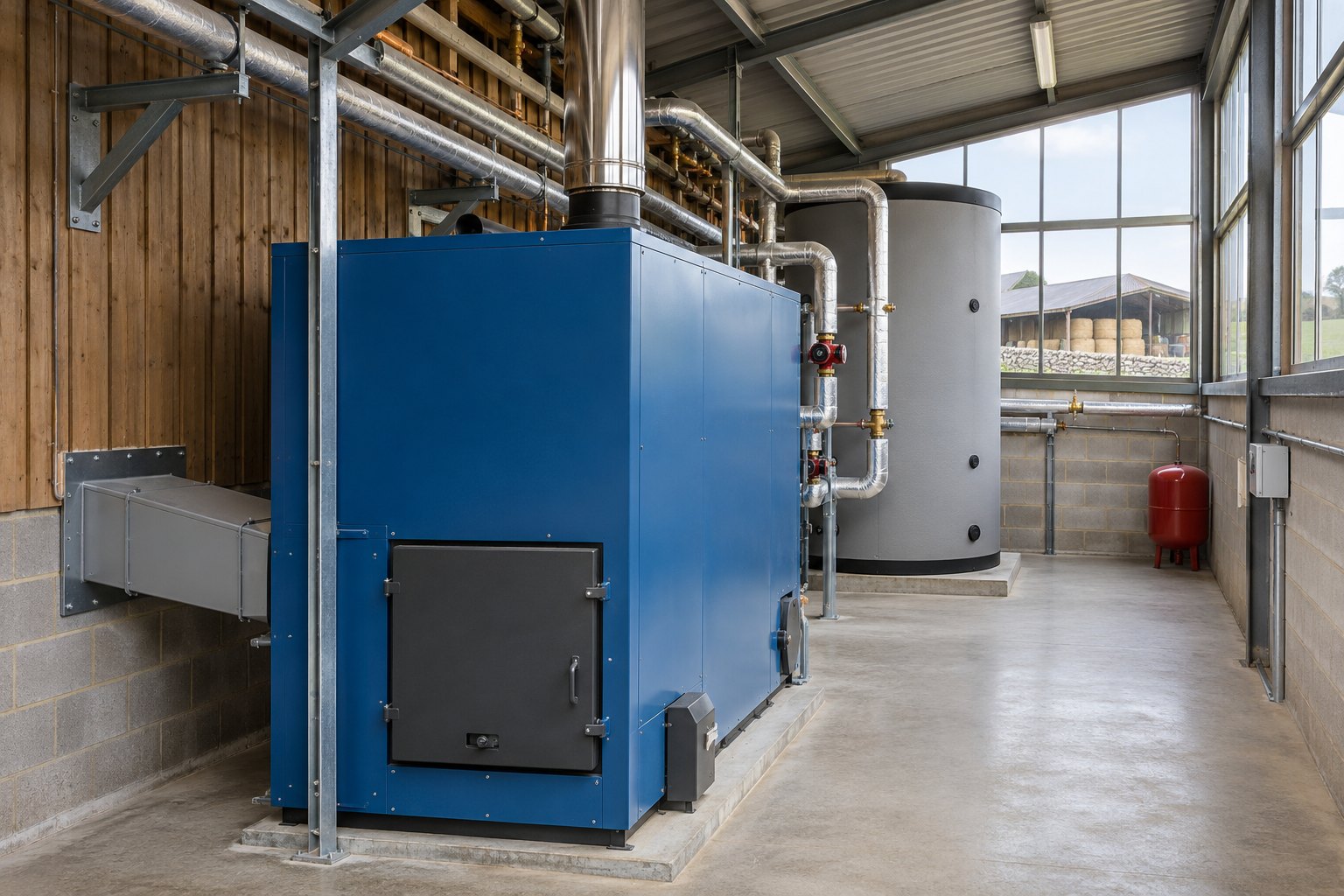
The design starts with the heat load, not the boiler. An installer collects or estimates how much heat the buildings use across a year, then sizes a boiler and accumulator tank to match. They also plan how fuel arrives, where it is stored, how it reaches the boiler and where the flue discharges. A boiler sized for the winter peak can spend most of the year running at a fraction of its output, which fouls the flue and wastes fuel.
Signs you need commercial biomass boiler installation
- Gas, oil or LPG is one of your largest monthly overheads and the price keeps changing.
- Your site has a steady heat demand, such as a swimming pool, drying process, care home or boarding house.
- You have land, a yard or a plant room where a fuel store and delivery vehicle could fit.
- A fossil fuel boiler is failing or has reached the end of its life.
- You have a local source of wood chip, offcuts or pellets and want to use it.
Commercial biomass boiler installation options explained
The right system depends on how much fuel you will burn and who supplies it.
Wood pellet systems
Pellets are consistent, clean and easy to store, which makes them the usual choice for hotels, schools and offices. They cost more per tonne than chip, so the saving comes from convenience and low labour rather than from the cheapest fuel.
Wood chip systems
Chip suits farms, estates and sites with their own timber, and it is often cheaper to buy. The store has to be several times larger than a pellet store for the same heat, and the feed system and boiler are built to cope with variable moisture content.
Multi-building and heat network schemes
Where one boiler house serves several buildings, the buried pipework, heat meters and a plan for who pays for what become part of the job. They take longer to design but spread the cost across more users.
Planning the changeover and staff handover
Ask how the site will stay heated during the changeover. A hotel, workshop and livestock building may have different operating hours. Include standby heating and staff training in the specification.
Before handover, agree who records meter readings, checks fuel levels and arranges ash collection. Ask the installer to demonstrate the controls and leave the maintenance schedule with the site manager. Confirm whether trench reinstatement and removal of packaging are included.
What to include when asking for a quote
Send the specialist a picture of the heat demand. Meter readings or twelve months of fuel invoices are ideal, along with the number of buildings, the operating hours and any process loads. If you cannot supply figures, say what the buildings are used for and the specialist can estimate, but the quote will carry more allowances.
Describe fuel logistics honestly. Give the width of the access road, the turning space and the height clearance for a delivery lorry or tipping trailer. Say who would supply the fuel and whether you want a supply contract with a moisture content specification. A boiler design that ignores delivery will not work in practice.
A written quote names the boiler output and make, accumulator volume, fuel store type and capacity, flue height and materials, controls and building management links and the heat meter. It should show what the price assumes about emissions and permits, the commissioning programme, the warranty and the cost and response time of maintenance after handover.
How much does commercial biomass boiler installation cost?
| Type of job | Budget range |
|---|---|
| 50–100 kW boiler in an existing plant room | £25,000–£50,000 |
| 100–250 kW boiler with a new fuel store and feed | £50,000–£90,000 |
| Larger plant, a new boiler house or a heat network | £90,000–£120,000 |
Our indicative UK range for commercial biomass boiler installation is £25,000–£120,000. Large or networked schemes can pass the top of that range, and they are priced individually after a feasibility study. Always ask what the fuel store, boiler house and any planning or permit work are assumed to cost.
Our budgeting range was checked against published installer cost examples. Published prices have different inclusions; confirm VAT, travel and exclusions in your own quote.
The commercial biomass boiler installation process: what to expect
- A feasibility visit and load assessment confirm whether biomass suits the site.
- The installer proposes a design with fuel logistics, the plant layout and the flue route.
- Planning, permit and building control matters are checked before any order is placed.
- Civil work, boiler house or store, boiler, accumulator, pipework and controls are installed.
- The system is commissioned, emissions and heat output are tested and staff are trained.
- The handover pack includes commissioning records, the maintenance schedule and fuel supply details.
Planning permission and building regulations
A boiler house or fuel store may need planning permission, and a flue serving business premises can need the local authority to approve its height. Raise both with the council's planning and environmental health teams at the design stage. Ask the designer to confirm the applicable building and fire-safety requirements, including any plant-room or store separation. For England, see Approved Document B on fire safety. Smoke control rules still apply in a controlled area, as the gov.uk smoke control area rules explain.
Larger plant can fall under environmental permitting. The gov.uk guidance on medium combustion plant permits covers England and Wales and links to the separate Scottish and Northern Irish requirements. Government heat incentives for businesses have changed over the years, so do not assume a grant exists; ask the installer what funding is open when you apply.
How to choose a commercial biomass boiler installation specialist
Ask these before you shortlist anyone for a commercial scheme.
- Can you show me two or three comparable sites you have installed and let me speak to the owners?
- Who designs the fuel delivery and store, and have you checked a real delivery vehicle can use it?
- How do you size the boiler against our base load rather than our peak?
- What emissions, planning and permit work does your price include?
- How fast do you respond to a breakdown, and what does a maintenance contract cost?
Frequently asked questions
How big does a commercial biomass boiler need to be?
It is usually sized to the base load, not the coldest day. A second boiler or an existing gas or oil unit often covers the peaks. Sizing to the peak alone tends to waste fuel and foul the flue.
Do we need planning permission for a commercial biomass boiler?
Often yes for a new boiler house, fuel store or tall flue, though an installation inside an existing plant room may need less. Ask the council before you place an order and keep its reply.
What fuel store does a commercial system need?
That depends on fuel and usage. Pellets can go in a silo or a built store. Chip needs a much larger space, often with a walking floor or auger feed. The store must be reachable by your supplier's vehicle.
How much does a commercial biomass boiler installation cost?
Our guide is £25,000–£120,000, and larger schemes can exceed it. Boiler size, fuel store, building work and flue height all affect the price.
Related biomass work
For related work, compare the scope of biomass boiler breakdown repairs and fuel store and hopper installation before you book.
Request a price for your biomass boiler
Use the free biomass boiler enquiry form to describe the work. Up to four independent businesses may reply, depending on coverage and availability. Getbiomassboiler.co.uk introduces enquiries. It does not do the work or employ the engineers, and you agree the price and contract with the business you choose.
If a carbon monoxide alarm sounds, leave the building and get urgent advice. Do not wait for quote replies, and do not restart the boiler until a competent professional has checked it. Follow the HSE advice on suspected carbon monoxide exposure.