
What is biomass fuel store and hopper installation?
Biomass fuel store and hopper installation covers the part of a wood-fuelled system that holds and delivers the fuel. A hopper is a smaller bin that sits beside the boiler and is topped up by hand from sacks. A store is a larger space or silo that takes a tanker delivery and feeds the boiler by auger or vacuum line.
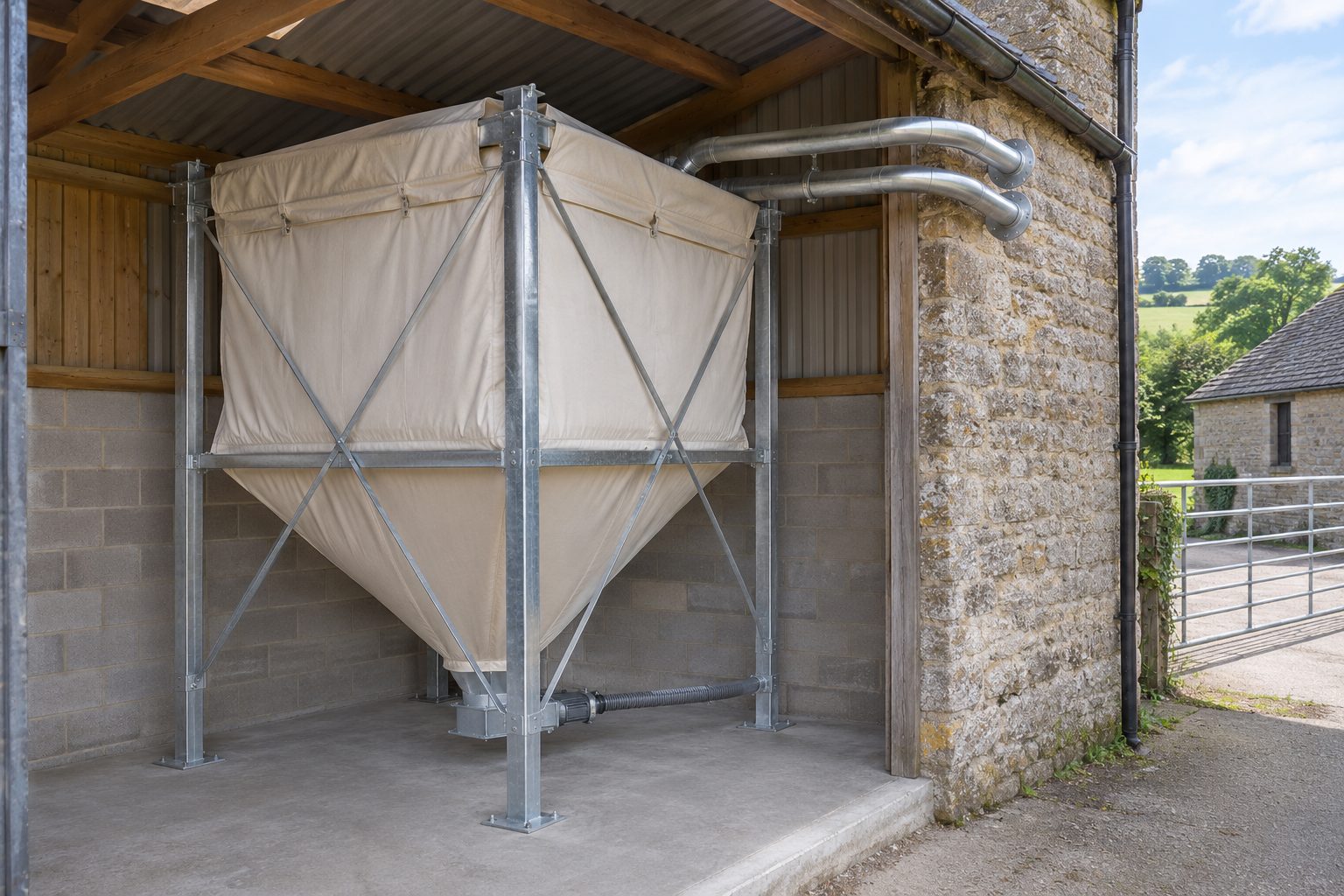
The store matters as much as the boiler. If it is too small, you pay for frequent deliveries. If it is damp, the pellets swell and jam the feed. If it is badly designed, tanker deliveries become awkward and dusty. A good design fits the space, the delivery route and the boiler's feed in one plan.
Signs you need biomass fuel store and hopper installation
- You are planning a pellet boiler and have no dedicated place to keep the fuel.
- Your current hopper empties in a day or two and you are refilling by hand constantly.
- The existing store is damp, or the pellets are swelling and breaking down.
- Tanker deliveries struggle to reach the store or leave dust everywhere.
- The feed keeps jamming because the store floor, outlet or auger is badly laid out.
Biomass fuel store and hopper installation options explained
The right choice depends on how much fuel you burn and how deliveries will reach you.
Hopper with a sack-fill system
A hopper beside the boiler holds from a few hundred kilograms upward and is filled from bagged pellets. It is the simplest and cheapest route, but you do the lifting, and a large house can empty it in days in winter.
Fabric silo or prefabricated store
A flexible fabric silo on a frame, or a ready-made steel or plastic store, takes a tanker delivery and holds several tonnes. It fits garages, outbuildings and plant rooms, and it can be installed in a day or two.
Built bulk store with a sloping floor
A purpose-built room or outbuilding with a sloped floor, sealed walls and a feed outlet gives the largest capacity. It costs most and takes longest, and it needs the store to be dry, dust tight and fire separated from the house where required.
Matching the store to the delivery
Confirm the proposed fill-point position with your pellet supplier before installation. Usable capacity differs from the outside dimensions. Ask the installer to allow for the sloping floor and fuel left below the extraction point.
The installer should test the feed connection and explain the delivery procedure before the first fill. Ask who removes installation debris and checks weatherproofing around wall penetrations. Keep ventilation openings unobstructed and follow the store manufacturer's instructions.
What to include when asking for a quote
Work out the fuel you will burn. Say what the boiler output is, how many months it runs and what the heating bills have been. The installer converts that into tonnes a year and a store volume, allowing for the fuel density, sloping floor and extraction system.
Describe where the store could go and how a tanker would reach it. Give the distance from the road, the width of the access, the height of any gate or arch and the distance to the boiler. Delivery hoses have a limited reach, so ask your pellet supplier what they can manage before you fix the store position.
A written quote should state the store type and capacity, the feed method, the fill and extraction pipes, any dust and earthing arrangements, the base and the weatherproofing. Ask whether the price includes connecting the feed to the boiler and testing it, and who is responsible for any damp or fire separation work.
How much does biomass fuel store and hopper installation cost?
| Type of job | Budget range |
|---|---|
| Hopper and sack-fill feed beside the boiler | £1,500–£3,000 |
| Fabric silo or prefabricated store with feed and fill pipes | £3,000–£6,000 |
| Built bulk store with sloping floor, feed and fill system | £6,000–£9,000 |
Our indicative UK range for biomass fuel store and hopper installation is £1,500–£9,000. Capacity, the feed method and whether the store is bought or built on site decide the price. Groundworks, a new base or a building to house the store can sit outside the range.
Our budgeting range was checked against Collinson silo specifications and equipment prices. Published prices have different inclusions; confirm VAT, travel and exclusions in your own quote.
The biomass fuel store and hopper installation process: what to expect
- The installer measures the site and the delivery route and confirms the store capacity.
- You agree the store type, position and feed method in writing.
- The base is prepared and the hopper, silo or store structure is built or fitted.
- The feed, fill pipe, extraction pipe and any earthing are installed.
- The store is connected to the boiler, tested and checked for dust tightness.
- You are shown how to order, fill and keep the store dry and safe.
Planning permission and building regulations
A store attached to the house may need fire separation, and one in an outbuilding must keep the pellets dry and ventilated as the design requires. If the store is a new building, check the rules in the Planning Portal guidance on outbuildings in England or ask the council. Building Regulations can apply where the store is part of the house.
Treat the store as a confined space. Stored pellets can give off carbon monoxide and use up the oxygen in the air, and the HSE safety bulletin on carbon monoxide from wood pellets explains the risk. Buy certified fuel, such as pellets under the ENplus pellet certification scheme, and keep it dry.
How to choose a biomass fuel store and hopper installation specialist
Ask these while you walk the site with a store installer.
- How did you calculate the store size for my boiler and my usage?
- Has a tanker driver or my pellet supplier confirmed they can reach the fill point?
- How will the store stay dry and how is it ventilated and earthed?
- Does the price include connecting and testing the feed to the boiler?
- What do I need to do to keep the store safe during a delivery?
Frequently asked questions
How big should a pellet store be?
Size the store around annual fuel use, delivery quantities and the supplier's access requirements. Ask for its usable capacity after allowing for the sloping floor and extraction system.
Can I store pellets in a garage or shed?
Yes, if it is dry, sealed against damp and sized for the fuel. The pellets must not get wet, and a shed that leaks will quickly spoil them. A fabric silo can be a good fit.
Is a pellet store dangerous?
Yes. Stored pellets can release carbon monoxide and reduce oxygen. Do not enter the store or put your head into a hopper; any necessary entry needs trained specialists and confined-space controls.
How much does biomass fuel store and hopper installation cost?
Our guide is £1,500–£9,000. A simple hopper costs least, and a built store with a sloping floor costs most. Groundworks can add to the figure.
Related biomass work
For related work, compare the scope of domestic biomass boiler installation and wood pellet boiler replacement before you book.
Request a price for your biomass boiler
Use the free biomass boiler enquiry form to describe the work. Up to four independent businesses may reply, depending on coverage and availability. Getbiomassboiler.co.uk introduces enquiries. It does not do the work or employ the engineers, and you agree the price and contract with the business you choose.
If a carbon monoxide alarm sounds, leave the building and get urgent advice. Do not wait for quote replies, and do not restart the boiler until a competent professional has checked it. Follow the HSE advice on suspected carbon monoxide exposure.